
Pearl Aquatics

Large Aquarium Installation Preparation: Access, Support and Sump Checklist
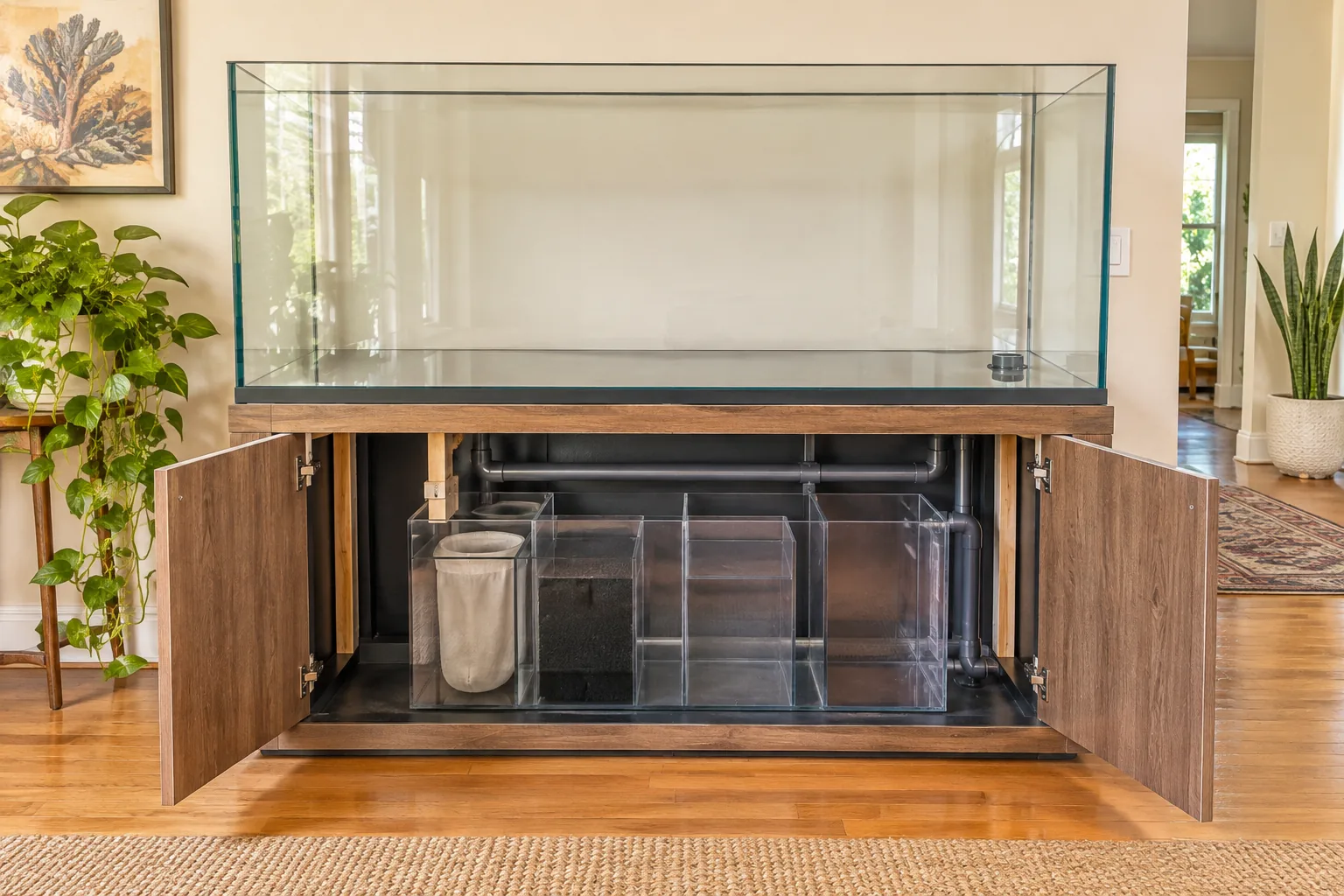
Empty glass aquarium on a supported cabinet with preparation equipment

Aquarium Guides / Aquarium Tanks & Buying Guides Aquarium Tanks & Buying Guides In this guide Confirm the exact set and installation scope Measure the whole delivery route Agree a safe permanent position Plan power, water and maintenance access Ask for a sump and equipment handover Keep existing fish safe Frequently asked questions Related guides and references Preparing the site before delivery helps avoid access problems and rushed decisions. Use this checklist for a large freshwater aquarium, including MJ and SOBO sets. It is a planning guide, not a structural assessment or a substitute for the manufacturer’s instructions. 1. Confirm the exact set and installation scope Record the model, actual tank dimensions, cabinet footprint, overall height and equipment list from the quotation. Confirm who is responsible for delivery, positioning, plumbing, setup and later maintenance. Ask separately about stairs, dismantling an old setup, disposal and transferring existing fish. Do not assume these services are included. 2. Measure the whole delivery route Measure the narrowest doorway, corridor and lift opening, not just the room entrance. Check turns, stair landings, ceiling clearance and any gates along the carrying route. Tell the installer about floors, stairs, lift restrictions, loading access and building booking rules. Share photographs and measurements before delivery. Leave final handling and carrying arrangements to the installation team. Do not assume a nominal 6ft model fits a route simply because one doorway is wider than six feet. Packaging, turning room, equipment and safe carrying space also matter. 3. Agree a safe permanent position Choose a stable location with room for feeding, cleaning, opening cabinet doors and removing equipment. Avoid direct sunlight and positions exposed to knocks. Confirm that the floor and support can carry the complete filled installation. Water alone is roughly 1kg per litre; the tank, cabinet, sump, rocks and substrate add weight. Seek a qualified structural assessment where capacity is uncertain, especially on upper floors. Use the specified cabinet and support method. Do not add improvised padding, wedges or modifications unless the manufacturer or installer approves the exact arrangement. Never try to reposition a filled aquarium. 4. Plan power, water and maintenance access Arrange suitable, safely positioned electrical outlets and protection with a qualified electrician where needed. Keep plugs and connections away from splashes and use drip loops. Plan a safe water-change route and access to drainage; do not assume a sump’s drainage arrangement permits unattended draining or refilling. Keep space available to service pumps, lights and filter media. 5. Ask for a sump and equipment handover Confirm the intended water levels and mark them if the installer recommends it. Have the installer test for leaks, normal overflow operation and pump restart behaviour. Check that the sump can accommodate drain-back when power stops, without overflowing. Learn how to isolate equipment safely and which media need routine cleaning. Confirm emergency contact arrangements and model-specific warranty conditions. Do not run pumps or heaters dry; follow each device’s instructions. A bigger return pump is not automatically better: flow must suit the plumbing, overflow and intended system. 6. Keep existing fish safe Agree a fish-transfer plan before dismantling an established tank. It should cover suitable temporary holding, temperature, aeration, transport time and protection of established filter media. Moving the aquarium does not remove the need to test ammonia and nitrite afterward. Avoid moving mature media in untreated chlorinated water or allowing it to dry out. For a new setup, treat source water appropriately, establish biological filtration and verify conditions before adding fish. A newly installed tank is not automatically cycled, even if the water is clear or a bottled bacterial product has been added. Frequently asked questions Can the installer confirm my building’s structural capacity? Not unless they are qualified and specifically engaged to assess it. A building professional should resolve structural uncertainty; installers can confirm equipment and access requirements within their own scope. Should I dismantle my existing tank before the team arrives? Only after the agreed sequence and temporary fish-holding arrangements are confirmed. Premature dismantling can leave fish without suitable filtration, oxygen or temperature control. What should I prepare for an MJ installation? Use the exact quoted MJ dimensions and equipment list, then work through access, support, electrical supply, sump handover and fish-transfer questions above. The same safety planning applies to other large aquarium brands. Related guides and references Compare 4ft, 5ft, 6ft and 6.5ft aquariums · Current MJ models · SOBO aquariums. General setup and water-quality reference: Merck Veterinary Manual — Providing a Home for Fish. Follow the supplied manufacturer’s instructions for the specific tank and equipment.
4ft, 5ft, 6ft or 6.5ft Aquarium: A Practical Buying Guide

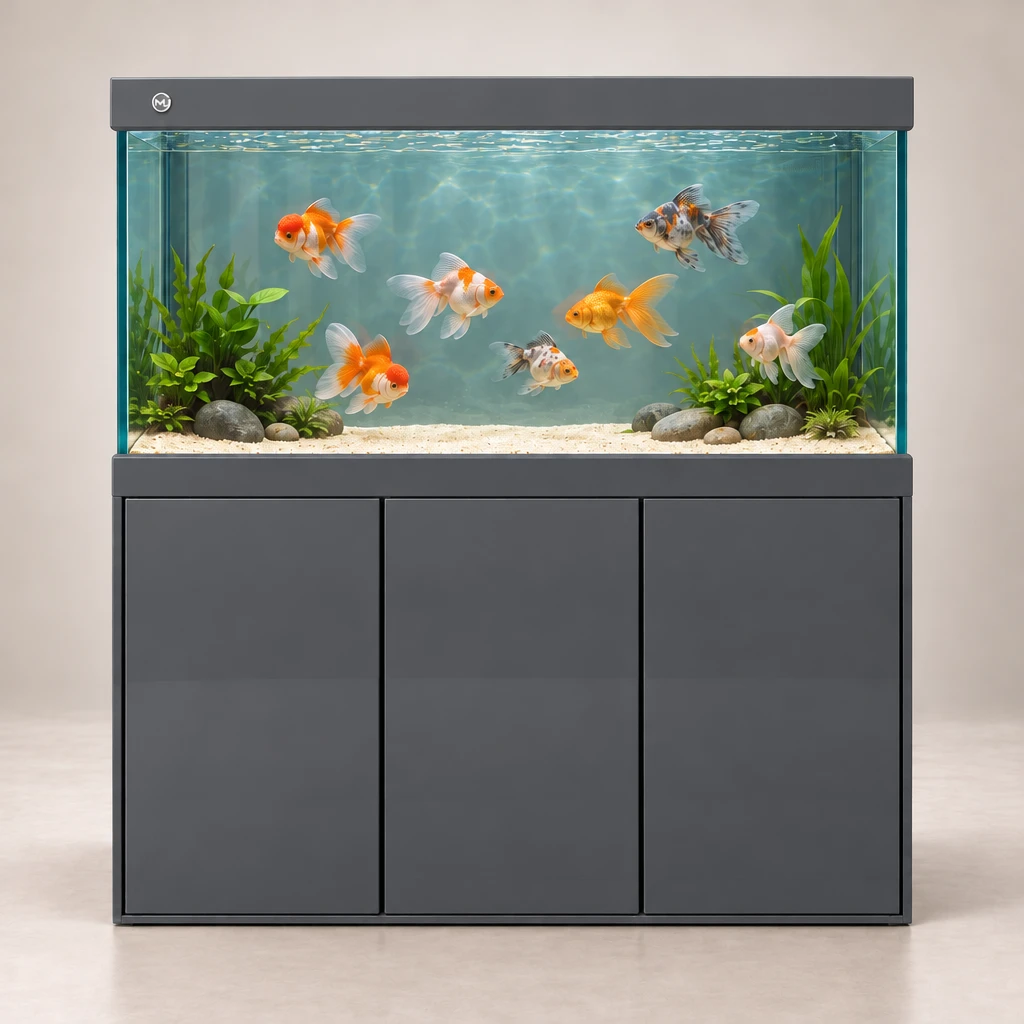
MJ 4 x 2 x 2.5ft grey aquarium and three-door cabinet with illustrative goldfish setup

Aquarium Guides / Aquarium Tanks & Buying Guides Aquarium Tanks & Buying Guides In this guide Start with adult fish and usable space Comparing the main size options Glass thickness: compare the complete design Cabinet and sump considerations Choosing an MJ or SOBO model Questions to ask before ordering Frequently asked questions Next steps Sources and specification note Choose a large freshwater aquarium around the adult fish you intend to keep, the space available and the maintenance you can realistically provide. A longer tank is not automatically suitable for every large fish, and a model’s advertised length is not a complete specification. Start with adult fish and usable space Check adult size, swimming behaviour, territorial needs, group size and water requirements before choosing a tank. Width matters for turning space; height affects reach during cleaning. Do not use a fixed fish-per-litre rule or a display photograph as a stocking plan. A deeper tank may hold more water without offering the horizontal swimming space a particular species needs. Comparing the main size options Nominal size What to compare Practical question 4ft Different widths and heights within the same length class Does the footprint suit the adult fish, not just the available wall? 5ft Extra length, cabinet footprint and delivery route Can the complete set pass every turn and doorway? 6ft Actual dimensions, filtration layout and total installed load Are the floor, support and service access suitable? 6.5ft Room circulation, carrying access and maintenance reach Can you reach the bottom and remove equipment safely? These are size classes, not exact measured dimensions. Confirm the manufacturer’s millimetre measurements, tank height, cabinet size and overall installed height for the exact model. Do not calculate water volume from the model name alone. Glass thickness: compare the complete design There is no safe universal thickness recommendation based only on tank length. Water depth, panel spans, glass type, bracing, joints and the intended support all matter. Ask for the manufacturer’s specification for the exact model, including whether front and side panels differ. Do not remove braces, drill glass or change the support arrangement without the manufacturer’s approval. A generic internet chart is not a substitute for a properly specified tank. Cabinet and sump considerations Use a cabinet or stand designed for the tank and installed according to its instructions. A level-looking top does not prove the structure or floor is adequate. Water alone weighs roughly 1kg per litre; glass, cabinet, sump water, substrate and rocks add more. For an upper-floor installation or uncertain structure, obtain advice from a qualified building professional. A sump can provide room for mechanical and biological filtration, but its presence does not guarantee clean or safe water. Compare access for cleaning, media space, pipework, noise, pump suitability and how the system behaves during a power cut. Have the installer check the overflow and return arrangement and leave enough sump capacity for water that drains back when the pump stops. Choosing an MJ or SOBO model Pearl Aquatics’ current MJ range lists 4×1.5×2ft, 4×1.5×2.5ft, 4×2×2.5ft, 5×2×2.5ft, 6×2×2.5ft and 6.5×2×2.5ft model names. Compare the exact dimensions and included equipment on the linked model pages and confirm them in your quotation. Model names are retained here as published, not converted into engineering measurements. Also explore the SOBO aquarium range. Compare the complete quoted setup, suitability for your fish and after-sales terms rather than assuming one brand or a larger nominal size is always better. Product prices, promotions, stock and inclusions may change, so this guide does not reproduce them. Questions to ask before ordering What are the exact tank, cabinet and installed dimensions? What glass, bracing and support arrangement does this model require? What equipment is included, and what needs to be purchased separately? Who checks access, placement, pipework and the power-off test? Are delivery, stairs, installation and any existing-fish transfer separately quoted? What maintenance, warranty conditions and exclusions apply? Frequently asked questions Is a larger aquarium always easier to maintain? More water can provide a buffer against rapid changes, but a larger setup still needs appropriate stocking, established biological filtration, testing and regular maintenance. Cleaning access, water changes and total cost also grow in importance. Can I add fish immediately after installation? Installation and clear water do not establish a biological filter. Follow a fishless cycling plan and verify water conditions with suitable tests before stocking. Add compatible fish gradually and plan quarantine for new arrivals. Which MJ size is best for me? Provide the adult fish species, room measurements, delivery route and maintenance plans. Match those needs to verified model specifications instead of choosing solely by appearance or promotional price. Next steps Read our large-aquarium installation checklist, explore aquarium ranges, or find an outlet through Store. Sources and specification note Placement, support, water quality and biological-filtration principles: Merck Veterinary Manual — Providing a Home for Fish. MJ model names were checked against Pearl Aquatics’ live MJ range on 27 November 2026. Model-specific construction and load suitability must be confirmed for the actual installation.