
Aquarium Tanks & Buying Guides
Preparing the site before delivery helps avoid access problems and rushed decisions. Use this checklist for a large freshwater aquarium, including MJ and SOBO sets. It is a planning guide, not a structural assessment or a substitute for the manufacturer’s instructions.
1. Confirm the exact set and installation scope
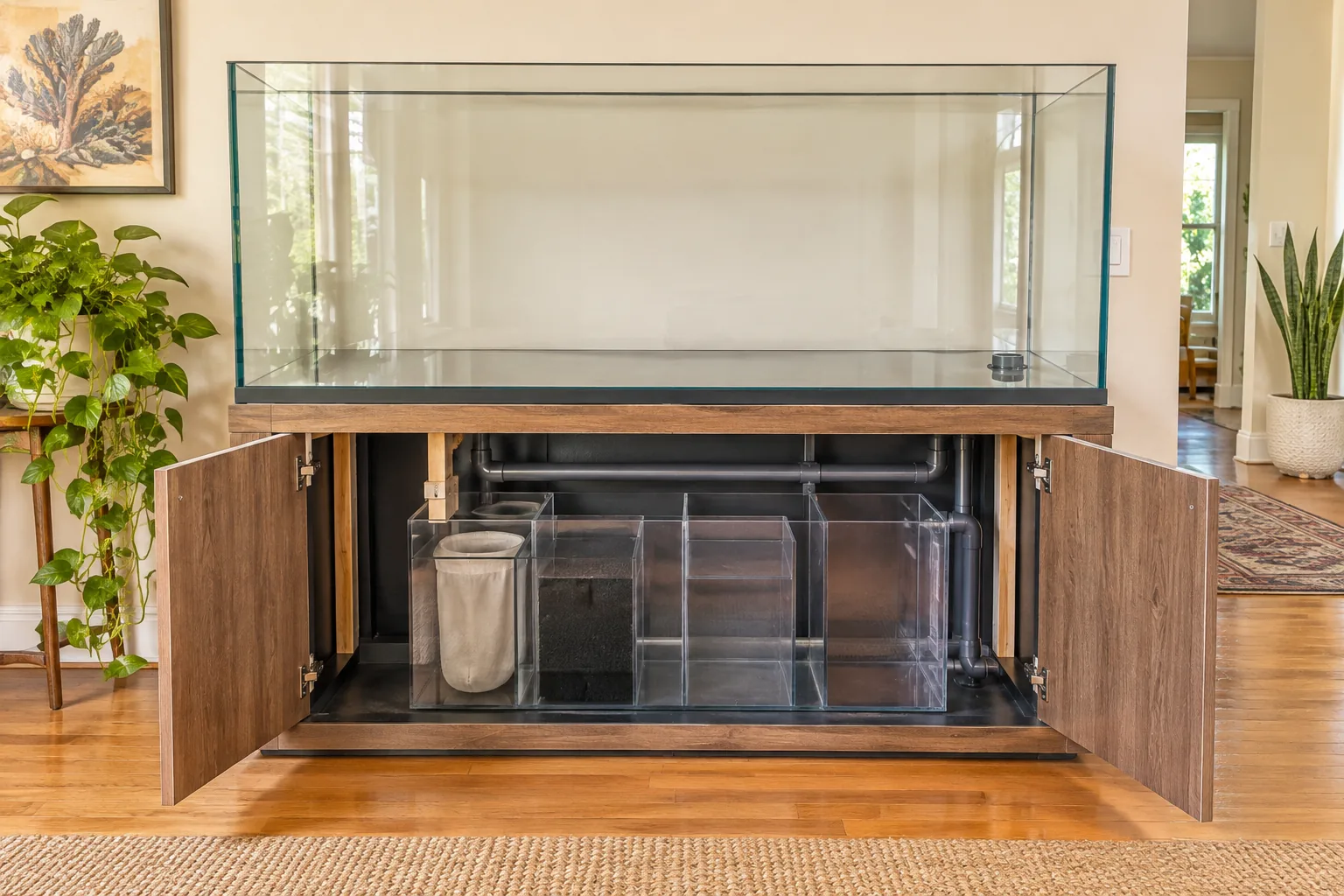
Record the model, actual tank dimensions, cabinet footprint, overall height and equipment list from the quotation. Confirm who is responsible for delivery, positioning, plumbing, setup and later maintenance. Ask separately about stairs, dismantling an old setup, disposal and transferring existing fish. Do not assume these services are included.
2. Measure the whole delivery route
- Measure the narrowest doorway, corridor and lift opening, not just the room entrance.
- Check turns, stair landings, ceiling clearance and any gates along the carrying route.
- Tell the installer about floors, stairs, lift restrictions, loading access and building booking rules.
- Share photographs and measurements before delivery. Leave final handling and carrying arrangements to the installation team.
Do not assume a nominal 6ft model fits a route simply because one doorway is wider than six feet. Packaging, turning room, equipment and safe carrying space also matter.
3. Agree a safe permanent position
Choose a stable location with room for feeding, cleaning, opening cabinet doors and removing equipment. Avoid direct sunlight and positions exposed to knocks. Confirm that the floor and support can carry the complete filled installation. Water alone is roughly 1kg per litre; the tank, cabinet, sump, rocks and substrate add weight. Seek a qualified structural assessment where capacity is uncertain, especially on upper floors.
Use the specified cabinet and support method. Do not add improvised padding, wedges or modifications unless the manufacturer or installer approves the exact arrangement. Never try to reposition a filled aquarium.
4. Plan power, water and maintenance access
Arrange suitable, safely positioned electrical outlets and protection with a qualified electrician where needed. Keep plugs and connections away from splashes and use drip loops. Plan a safe water-change route and access to drainage; do not assume a sump’s drainage arrangement permits unattended draining or refilling. Keep space available to service pumps, lights and filter media.
5. Ask for a sump and equipment handover
- Confirm the intended water levels and mark them if the installer recommends it.
- Have the installer test for leaks, normal overflow operation and pump restart behaviour.
- Check that the sump can accommodate drain-back when power stops, without overflowing.
- Learn how to isolate equipment safely and which media need routine cleaning.
- Confirm emergency contact arrangements and model-specific warranty conditions.
Do not run pumps or heaters dry; follow each device’s instructions. A bigger return pump is not automatically better: flow must suit the plumbing, overflow and intended system.
6. Keep existing fish safe
Agree a fish-transfer plan before dismantling an established tank. It should cover suitable temporary holding, temperature, aeration, transport time and protection of established filter media. Moving the aquarium does not remove the need to test ammonia and nitrite afterward. Avoid moving mature media in untreated chlorinated water or allowing it to dry out.
For a new setup, treat source water appropriately, establish biological filtration and verify conditions before adding fish. A newly installed tank is not automatically cycled, even if the water is clear or a bottled bacterial product has been added.
Frequently asked questions
Can the installer confirm my building’s structural capacity?
Not unless they are qualified and specifically engaged to assess it. A building professional should resolve structural uncertainty; installers can confirm equipment and access requirements within their own scope.
Should I dismantle my existing tank before the team arrives?
Only after the agreed sequence and temporary fish-holding arrangements are confirmed. Premature dismantling can leave fish without suitable filtration, oxygen or temperature control.
What should I prepare for an MJ installation?
Use the exact quoted MJ dimensions and equipment list, then work through access, support, electrical supply, sump handover and fish-transfer questions above. The same safety planning applies to other large aquarium brands.
Related guides and references
Compare 4ft, 5ft, 6ft and 6.5ft aquariums · Current MJ models · SOBO aquariums.
General setup and water-quality reference: Merck Veterinary Manual — Providing a Home for Fish. Follow the supplied manufacturer’s instructions for the specific tank and equipment.